The check stack we actually run
How to Verify a Gold Bar Is Real
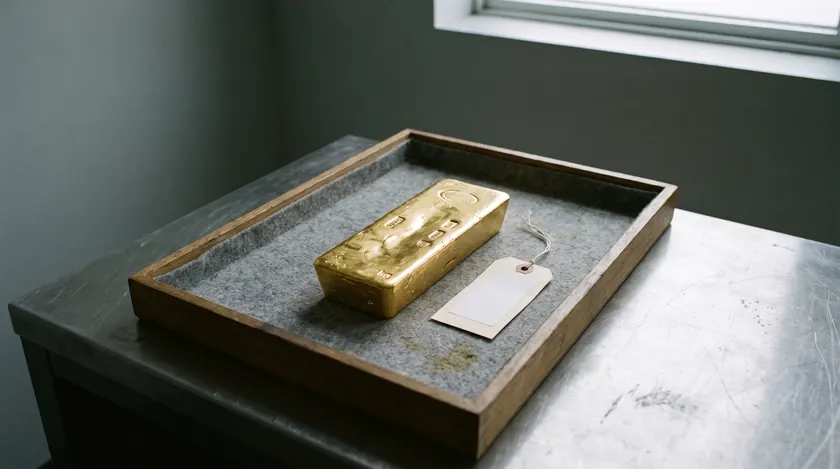
We have watched a bar go under an XRF scanner and come back wrong more than once, and each time the owner was certain it was fine because the assay card looked perfect. A card is paper. What is inside a sealed bar is a separate question, with its own stack of tests, not one answer.
This is that stack, in the order we run it, from checking the refiner against the LBMA list through to ultrasound, plus a table of which test catches what and, just as importantly, which one it quietly misses.
Start with the refiner, not the bar
Before anything gets measured, confirm the refiner or mint is on the current LBMA Good Delivery List. Every legitimate 1kg gold bar from PAMP Suisse, Valcambi, Argor-Heraeus or Perth Mint traces back to that list, and buying only through an authorized dealer closes off most fraud before it starts, whether in Dubai or anywhere else. A bar from a refiner nobody can verify is a bigger red flag than any single test.
How do I check a gold bar's serial number?
Every modern investment bar carries a serial number, hallmark, fineness and year stamped on its face, matching the assay certificate exactly. The useful second step is checking it again on the refiner's own lookup portal, PAMP's Veriscan being the clearest example, rather than trusting the certificate alone. Coins differ: a Krugerrand, Sovereign or Eagle carries no serial or assay card, so condition and where you bought it carry more weight than paperwork.
Are sealed assay cards enough proof on their own?
No, treat anyone who tells you otherwise carefully. A tamper-evident seal and assay card are useful, one data point, evidence the bar has not been opened since leaving the refiner. They are not proof of what is inside: a card can be forged or reused, and once a seal is broken that point disappears. Use the card as a starting signal, then still run an instrumented check on anything of value.
Can a magnet test detect fake gold?
Only the crude fakes. Gold is not magnetic, so a genuine piece will not respond to a magnet, ruling out the cheapest fraud, a gold-plated bar of iron or steel. It does not rule out the fraud that matters: tungsten is also non-magnetic, so a tungsten-filled bar passes a magnet test as easily as a real one. Treat a magnet as a five-second first screen, never a final answer.
What is a tungsten-filled gold bar and how common is it?
Tungsten is the counterfeiter's material of choice for one reason: its density is almost identical to gold's, close enough that a basic hydrostatic scale cannot reliably tell the two apart. Cases have surfaced publicly: a widely reported discovery in New York's jewelry district in 2012, and further tungsten-filled bars reported circulating in China in 2016. It is rare against the size of the legitimate market, but real enough to be the whole reason this check stack exists.
Specific gravity's limit, and what does not miss it
Gold's specific gravity is approximately 19.3. Tungsten's is approximately 19.25, near enough that a simple water-displacement test will not catch a well-made fake. A lab-grade hydrostatic setup does better, but the two tests that actually close the gap are XRF and ultrasound, covering different halves of the problem.
| Test | Catches | Misses |
|---|---|---|
| Visual and stamp check | Wrong hallmark, wrong weight stamp, crude engraving | A well-made fake with correct markings |
| Serial number, refiner portal | Bars only; confirms the serial exists in the refiner's own record | Coins carry no serial; a cloned serial on a fake bar |
| Sealed assay card | Supports provenance while the seal is unbroken | Forged or reused cards; proves nothing once opened |
| Weight and dimension check | Wrong-size blanks, underweight fakes | A fake cast to the exact weight and size |
| Magnet test | Iron or steel-core fakes | Tungsten, which is not magnetic either |
| Specific gravity, basic | Most base-metal fakes: lead, brass and similar | Tungsten specifically, its density nearly matches gold's |
| XRF scan | Surface composition, fast and non-destructive | A gold-clad core; XRF only reads a few microns deep |
| Ultrasound | Internal density and structure through the whole piece | Little; the closest to conclusive on a sealed bar |
| PCGS or NGC grading | Authenticity plus condition, coins especially historic ones | Bars; this is a coin-specific service |
Prefer to just ask? Send a short message, we reply the same day.
Ask a questionWhat does an XRF test show that acid tests do not?
XRF, X-ray fluorescence, reads the elemental composition of a surface in seconds without damaging the piece, the standard instrumented check at a reputable dealer or refiner counter. An acid test also reads surface metal, more crudely, with a visible mark left behind, so most dealers have moved to XRF for anything they intend to resell intact. Neither test looks past the surface, which is precisely the gap a gold-clad tungsten core is built to exploit.
Does an ultrasound test damage the bar?
No. Ultrasound measures how fast sound travels through the metal, and that speed depends on density and structure through the entire piece, not just the surface skin XRF reads. It is non-destructive and does not mark the bar, and it catches a gold-clad tungsten core, since sound cannot travel through the middle at the speed it should if the middle is not gold. For anything sealed and of real value, we treat ultrasound as the closest thing to conclusive short of drilling it.
The protocol, step by step
- Confirm the refiner or mint against the current LBMA Good Delivery List.
- Check the stamped hallmark, fineness, weight and year against spec.
- For bars, verify the serial number on the refiner's own lookup portal.
- Treat an intact assay card as supporting evidence, not proof.
- Weigh and measure the piece against official tolerance.
- Run a magnet test as a first, five-second screen only.
- For anything of meaningful value, get an XRF scan at a reputable dealer.
- For a sealed bar, add an ultrasound test before relying on the assay card alone.
- For coins, lean on design sharpness, mint-specific security features and dealer reputation, since no serial exists.
- For anything claimed rare or historic, insist on independent PCGS or NGC grading first.
- Buy only through authorized dealers or a mint's distributor list, and check the premium against live spot before committing.
If the bar or coin is part of an inheritance
An inherited piece deserves one extra step first: check whether it has numismatic value, since a historic coin can be worth more intact and graded than melted or resold as bullion. Our guide on selling inherited gold in Dubai walks through that decision.
Frequently asked questions
How do I check a gold bar's serial number?
Confirm it is stamped clearly with the hallmark, fineness and year, matching the assay certificate, then verify it on the refiner's own lookup portal, PAMP's Veriscan is the clearest example. Coins carry no serial at all, so this check applies to bars specifically.
Can a magnet test detect fake gold?
Only the crude fakes. Gold is not magnetic, so a genuine piece will not respond to a magnet, but tungsten is not magnetic either, so a tungsten-filled bar passes the same test just as easily. Use a magnet as a first quick screen, never the final word.
What is a tungsten-filled gold bar and how common is it?
A bar with a tungsten core clad in real gold, exploiting the fact that tungsten's density, about 19.25, sits almost against gold's 19.3. Documented cases have surfaced publicly: New York in 2012, and further reports out of China in 2016. It is rare against the size of the legitimate market, but consequential enough to justify testing anything of real value.
What does an XRF test show that acid tests do not?
Both read surface composition, but XRF does it in seconds without marking the piece, the standard dealer-counter check now. Neither reads below the surface, which is why a sealed bar of real value also deserves an ultrasound pass.
Does an ultrasound test damage the bar?
No. It measures the speed of sound through the entire piece, depending on internal density and structure, not just the surface, and leaves no mark. It is the test most likely to catch a gold-clad tungsten core, exactly what XRF cannot see.
Want us to check a specific bar or coin
Send us the refiner, weight and any serial number on WhatsApp and we will tell you what we would actually test before buying or selling it.
Ask a question