Numismatic and collector
Vintage Gold Coins: Valuation Beyond Melt
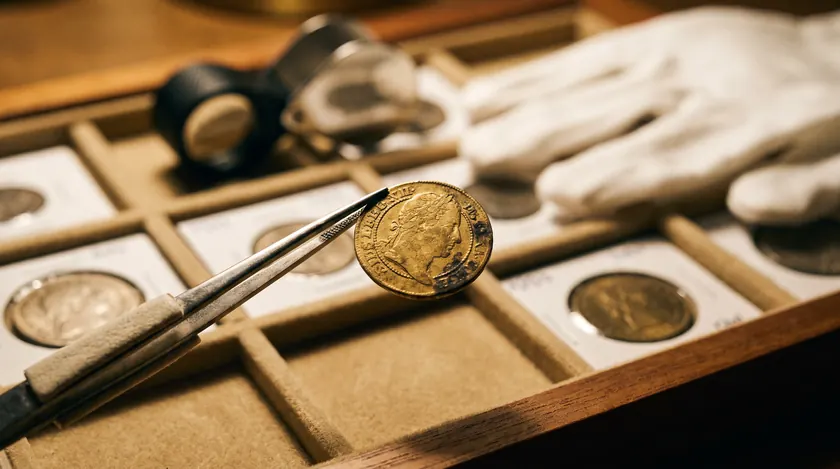
| Spec | Detail |
|---|---|
| Valuation basis | Melt value as the floor, plus a rarity, grade and demand premium |
| Grading scale | Sheldon 1 to 70, assigned by PCGS or NGC |
| Illustrative range | A common circulated $20 double eagle near 1.05 to 1.3x melt; certified rare dates reach five and six figures |
| Record sale | $18.87 million, 1933 Double Eagle, Sotheby's 2021 |
| Comparison method | Recent realized auction results, never dealer asking prices |
Melt value on any gold coin is a floor, never a ceiling, and nowhere is that gap more dramatic than in the numismatic market. A 1933 Double Eagle, a US $20 gold piece with roughly one troy ounce of fine gold in it, sold at Sotheby's in 2021 for $18.87 million. The gold in it was worth a few thousand dollars that week. Everything above that number was rarity: only a handful of 1933 Double Eagles are legally allowed to exist in private hands.
That is the extreme case, not the typical one, and we say so plainly. Most old gold coins that pass through our desk are worth a modest premium over melt, not a life-changing one. The point of this page is telling the difference before a coin gets sold, or bought, on the wrong number.
How grading actually works
PCGS and NGC are the two authentication and grading services that matter in this market. Both assign a coin a number on the Sheldon scale, 1 to 70, where a low number means heavily worn and 70 means a perfect, as-struck example. That number, not the coin's age, is the single biggest driver of price within a given date and mint.
Grading services also publish population reports: how many coins of that date, mint and grade they have certified. A date that looks rare on mintage figures alone can be common in the grade you are holding, and a date that looks ordinary can be genuinely scarce in high grade. We compare a coin against recent realized auction results for that specific date and grade, never against a dealer's asking price, since asking prices are aspirational and realized prices are what buyers actually paid.
Checks before any transaction
None of this is optional on a coin claimed to be rare.
- PCGS or NGC authentication and grading completed before any price is agreed
- Population report checked for that exact date, mint and grade
- Recent realized auction results compared, not dealer asking prices
- Date and mint mark rarity verified: common and key dates for the same design can differ by multiples
- Altered-date counterfeits watched for, a known risk on common coins reworked to look like rare dates
- Independent appraisal obtained separately from the buying dealer on anything high value
- Melt value used only as the floor calculation, never mistaken for the ceiling
Prefer to just ask? Send a short message, we reply the same day.
Get a coin valuationWhat Gulf and Asian inheritances hide
This is the highest-expertise line we handle, and the one where families most often leave money on the table. Inherited gold across Dubai, Singapore and Hong Kong regularly includes Gold Sovereigns and colonial-era coinage that arrived through decades of trade and migration, not through anyone's deliberate coin collecting. Sovereigns struck at branch mints, Sydney, Melbourne, Bombay, Ottawa, carry mint marks that change value on their own, separate from date rarity.
The family rarely suspects any of this. A box of coins gets treated the same as a box of jewellery, tested for karat and priced on melt, and a genuinely scarce date goes into the melt pot at a fraction of its real value. Separating coins from jewellery, and separating ordinary coins from key dates within the coins themselves, is the first thing we do on any inherited lot, before anything is priced. Our guide to selling inherited gold in Dubai covers the ownership paperwork side of this same situation.
Our process
We grade or arrange grading before we quote, we compare against realized auctions rather than asking prices, and on anything we believe is genuinely high value, we recommend an independent appraisal separate from us as the buyer, paid for by whichever side wants the extra certainty. That last point costs us the occasional quick sale. It is also the only way a valuation on a rare coin means anything.
In Singapore especially, where buyback quotes for the same item are known to vary 15 to 30% between buyers, we treat that second, independent opinion as standard practice, not an upsell. Sellers get the same discipline as buyers: we will not sell a coin as a key date without the grading to support it, and we show population reports and recent auction comparisons ourselves rather than asking anyone to take our word for it.
Have old or rare gold coins to value?
Tell us what you have, even roughly. We will say plainly whether grading is worth arranging before anything is priced.
Get a coin valuation