Three 1oz coins, one honest verdict
Krugerrand vs Maple Leaf vs American Eagle
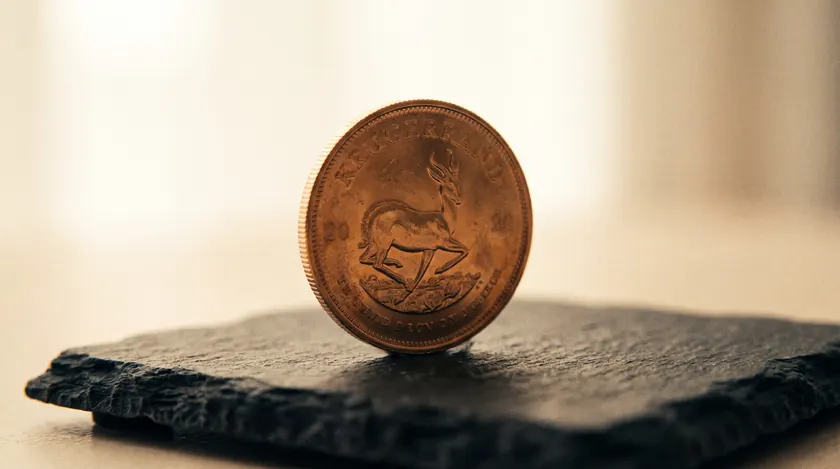
These are the three coins that come up in almost every first conversation about bullion coins, and buyers usually arrive already holding an opinion someone else gave them. The spec sheet is more interesting than the opinions: all three hold exactly one troy ounce of fine gold, and from there every other number, fineness, weight, premium, resale depth, genuinely diverges.
Here is the comparison we would actually give a client standing between the three, the numbers as we track them, the Singapore tax nuance that catches people out, and a straight recommendation by what you are actually trying to achieve.
Krugerrand vs Maple Leaf vs American Eagle at a glance
Do all three coins contain the same amount of gold? Yes, precisely one troy ounce of fine gold each. What differs is the alloy, and therefore the gross weight, the face value, and how each one behaves in the hand and on resale.
| Krugerrand | Canadian Maple Leaf | American Eagle | |
|---|---|---|---|
| Fineness | 916.7 (22k) | 999.9 (24k) | 916.7 (22k) |
| Alloy | Gold and copper | Pure gold, no alloy | Gold, silver and copper |
| Gross weight | 33.93g | 31.1035g | 33.93g |
| Face value | None printed | 50 Canadian dollars | 50 US dollars |
| Durability | Hard, copper resists scratches well | Soft, scratches easily, capsule matters at resale | Hard, alloy resists wear, faint tone difference from pure gold |
| Liquidity | Most liquid of the three; deep resale in Dubai and Singapore | Strong; the purity favourite across Asian markets | Reassuring for newer buyers; thinner Gulf and Asian secondary market |
| Typical premium, 2026 | Roughly 1 to 5 percent over spot | Roughly 2 to 4 percent over spot | Often the highest of the three, tracks US demand cycles |
Which 1oz gold coin has the lowest premium?
None of the three has a fixed, permanent edge, the published ranges genuinely overlap: Krugerrand around 1 to 5 percent over spot, Maple Leaf around 2 to 4 percent, American Eagle often the highest of the three because its premium tracks American retail demand cycles specifically. On a quiet week an Eagle can price close to a Maple Leaf; in a demand spike it can pull well ahead of both. Compare live premiums on the day you buy rather than trusting a rule of thumb, ours included.
Is a 22k Krugerrand worth less than a 24k Maple Leaf?
Not for the gold itself. Both coins are minted to hold exactly one troy ounce of fine gold, priced off the same spot, so the fine-gold value is identical between them. The difference shows up in gross weight and premium, not fineness-driven value: a Krugerrand weighs 33.93 grams because copper is diluting the alloy, while a Maple Leaf weighs only 31.1035 grams because it is pure. Sell either one back at a reputable desk and the payout is built from one troy ounce of fine gold plus whatever the current premium and buyback spread happen to be, not from a 22k-versus-24k discount that does not really exist at the fine-content level.
Which gold coin is easiest to resell internationally?
The Krugerrand, in our experience across Dubai and Singapore specifically. It was the first modern bullion coin, minted continuously since 1967, and that head start plus a genuinely enormous cumulative mintage means dealers everywhere recognize it instantly and buyback spreads stay tight. The Maple Leaf is a close second, especially with buyers who ask specifically about purity and anti-counterfeit technology, its Bullion DNA system is a real selling point in Singapore and Hong Kong. The American Eagle is the coin we would call reassuring rather than dominant: a well-known, government-guaranteed name that newer buyers gravitate to, with a secondary market across the Gulf and Asia that is real but noticeably thinner than the other two.
Why does the American Eagle cost more at retail?
Because its premium is driven by US domestic demand cycles rather than the more even, globally distributed demand that supports the Krugerrand and Maple Leaf. When American retail buying surges, Eagle premiums can run ahead of the other two majors even though the underlying gold content and spot price are identical. It is a demand-and-supply story tied to one market, not a reflection of any difference in quality or government guarantee.
Prefer to just ask? Send a short message, we reply the same day.
Ask a questionWhich coin resists scratches best?
Either 22 karat coin, the Krugerrand or the American Eagle. Copper, and in the Eagle's case silver as well, hardens the alloy against handling wear in a way pure 24k gold cannot match. The Maple Leaf and its 24k sibling the Vienna Philharmonic are genuinely soft metal, which is exactly why the Royal Canadian Mint ships every coin in a protective capsule and why surface condition matters more at resale on a 24k coin than on either 22k alternative.
The Singapore GST nuance almost nobody expects
Buyers shopping in Singapore specifically need to know one thing before choosing between these three: Singapore's GST exemption for Investment Precious Metals only covers items of 99.5 percent purity or higher. The Maple Leaf, at 999.9 fine, clears that bar and buys GST-free. The Krugerrand and American Eagle, both 916.7 fine, sit under the threshold and are taxed at the full 9 percent GST rate despite being recognized legal-tender bullion coins in South Africa and the United States respectively. We cover the full mechanics of that exemption in our Singapore buying guide, but for this specific comparison it is often the deciding factor for a Singapore-based purchase.
Honest recommendation, by what you are trying to achieve
- Maximum resale liquidity in the Gulf or Asia: the Krugerrand. Deepest cumulative mintage, tightest buyback spreads, the coin every desk from Dubai to Singapore already knows.
- Buying in Singapore, and GST exemption matters: the Canadian Maple Leaf or the Vienna Philharmonic, both 999.9 fine and both IPM-exempt, where the Krugerrand and Eagle are not.
- Lowest premium on a specific day: whichever of the three quotes lowest that morning. The ranges overlap enough that a fixed answer would be a guess, not a fact.
- A newer buyer who wants an internationally recognized, government-guaranteed name: the American Eagle, accepting a thinner Gulf and Asian secondary market as the trade-off.
- Long-term storage where surface condition matters: either 22k coin over the softer 24k options, or budget for careful, capsule-protected handling if you prefer the purity of the Maple Leaf.
Frequently asked questions
Do all three coins contain the same amount of gold?
Yes. The Krugerrand, Canadian Maple Leaf and American Eagle are each minted to hold exactly one troy ounce of fine gold. Gross weight differs because the Krugerrand and American Eagle are 22 karat alloys, 33.93 grams gross, while the Maple Leaf is 24k at 31.1035 grams, with no base metal diluting it.
Which 1oz gold coin has the lowest premium?
No single coin wins consistently. Published ranges overlap: roughly 1 to 5 percent over spot for the Krugerrand, 2 to 4 percent for the Maple Leaf, and the American Eagle often the highest of the three since its premium tracks US retail demand cycles. Compare live pricing on the day rather than assuming a fixed ranking.
Which gold coin is easiest to resell internationally?
The Krugerrand, based on its long history as the first modern bullion coin since 1967 and its especially deep resale market in Dubai and Singapore. The Maple Leaf follows closely, particularly with buyers who value its anti-counterfeit technology.
Why does the American Eagle cost more at retail?
Its premium tracks American domestic demand cycles specifically, so a surge in US retail buying can push Eagle premiums above the Krugerrand and Maple Leaf even though the gold content and spot price behind all three are identical.
Does Singapore tax the Krugerrand and American Eagle differently from the Maple Leaf?
Yes. Singapore's GST exemption only covers gold of 99.5 percent purity or higher. The 999.9 fine Maple Leaf qualifies and buys GST-free. The 916.7 fine Krugerrand and American Eagle fall under that threshold and are taxed at the full 9 percent GST rate.
Still deciding between the three
Tell us where you are buying and what matters most to you, resale, purity or tax treatment, and we will give you a straight answer, not a sales pitch.
Ask a question