The wholesale allocation size
1kg Gold Bar Price and Buying Guide
| Spec | Detail |
|---|---|
| Fineness | 999.9 (24 karat) |
| Weight | 1,000g = 32.1507 troy oz |
| Format | Cast or minted bar, serial-numbered with assay certificate |
| Makers | PAMP Suisse, Valcambi, Argor-Heraeus, Perth Mint |
| Indicative band · live quote on WhatsApp | $140,000 to $144,000 (melt approx $138,180 plus 1.5-4% dealer premium) |
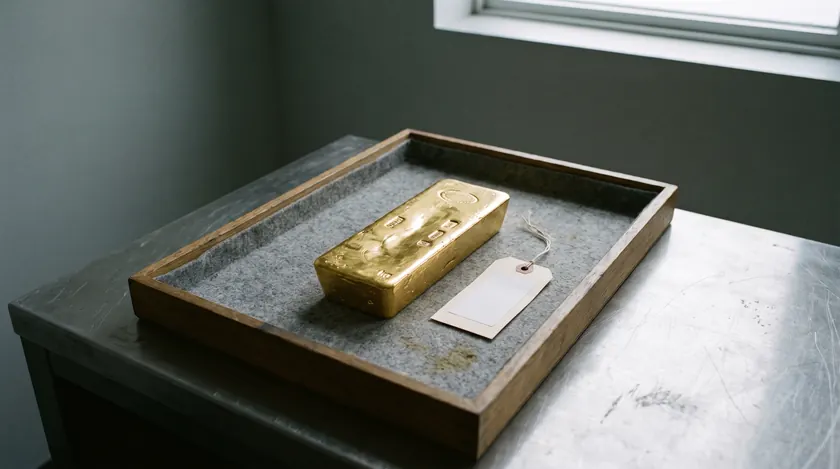
A 1kg bar is the wholesale end of the physical gold trade: 1,000 grams, 32.1507 troy ounces, cast or minted at 999.9 fine by an LBMA refiner and sold with a serial number and an assay certificate. It is the size institutions and family offices default to when the goal is holding a lot of value in the smallest number of physical pieces.
All three hubs we work in treat it as the benchmark wholesale format. Dubai's own commodities exchange, DGCX, launched the Gulf's first same-day-settled physical spot gold contract in June 2026 on 1kg UAEGD bars specifically, which tells you how central this size is to how the region actually trades gold, not just how it stores it. Singapore and Hong Kong price and vault it the same way, as the standard institutional and family-office allocation.
Price and premium in 2026
Spot gold sat near $4,298 an ounce on 25 Sept 2026. A 1kg bar's melt value at that price is roughly $138,180, and the indicative range we published in September 2026 runs $140,000 to $144,000, a premium of about 1.5 to 4 percent over melt. That is the lowest percentage premium of any format we quote: at wholesale size, the refiner's minting cost is spread over a lot more gold. The trade-off runs the other way on liquidity, a 1kg bar is the least divisible thing we handle. Spot moves daily, so we do not fix a number here, we quote live on WhatsApp against that day's price.
Within that band, three things move the premium: the refiner's name (PAMP Suisse, Valcambi, Argor-Heraeus and Perth Mint all carry a small brand premium over an unbranded Good Delivery bar), whether the bar is cast or minted, and size itself, since a 500g bar or 100g bar will always run a higher percentage premium than this one for the same fineness.
How to verify before you buy
A 1kg bar is worth checking properly before money changes hands, ideally before you leave the room.
Tungsten has almost the same density as gold, which is the whole reason tungsten-filled fakes exist. A magnet will not catch one, an ultrasound or XRF scan will. We cover the full method in how to verify a gold bar is real.
- Confirm the refiner is on the current LBMA Good Delivery List.
- Match the serial number, hallmark, fineness and year stamped on the bar against the assay certificate.
- Look the serial up on the refiner's own verification portal, not just the certificate.
- Ask for an ultrasound or XRF scan on any bar that has left its sealed packaging.
- Check the tamper-evident seal is intact before accepting the packaging as proof of anything.
- Buy only through dealers the refiner has actually authorized.
- Sanity-check the quoted premium against live spot before you agree a price.
LBMA Good Delivery or UAE Good Delivery?
Two standards matter for kilobars in these hubs. The LBMA Good Delivery List is the global reference for refiners. UAE Good Delivery, created by DMCC as the Dubai Good Delivery standard, is the one DGCX's physical spot contract uses for 1kg bars. If you buy a UAEGD bar in Dubai and may sell it in Singapore or Hong Kong later, ask before you buy whether buyers there accept it on the same terms as an LBMA bar, since acceptance lists differ by dealer.
Prefer to just ask? Send a short message, we reply the same day.
Get today's rateWhere it fits
This is a buyer-profile question as much as a product one. A 1kg bar suits someone consolidating a large private allocation into the fewest physical pieces: a family office, a business owner moving reserves into metal, someone who wants size, not flexibility. It is the wrong choice if you think you might need to sell a fraction of your position later, for that, look at our 500g or 100g bars instead.
Tax treatment favors it in all three hubs, because 999.9 fine clears every purity bar going. In the UAE it is zero-rated, and Cabinet Decision 127 of 2024 extends that zero-rating to registered B2B trade too, with no capital gains or income tax on an individual's profit. In Singapore it qualifies as an Investment Precious Metal under the IRAS rule, since IPM bars need only 99.5 percent purity and this one is 999.9. In Hong Kong there is no VAT, GST or capital gains tax at all, so the purity question never comes up. Compare that with a coin like the Krugerrand, where fineness of only 91.67 percent actually fails the Singapore test.
Buying and selling both ways
Selling a 1kg bar runs through the same assay-first process as buying one: XRF or ultrasound confirmation, serial and certificate check, and a quote against that day's spot before anything is agreed. The sale is executed by a registered dealer we name before you commit; in Dubai that means a DMCC or DET licensed house on goAML, and payment timing is confirmed in writing after assay and KYC.
Photos and the assay certificate for a specific bar are enough for a first-pass indication over WhatsApp, usually the same working day, in either direction. See the full range on our buy gold bullion page, current terms for Dubai, or how to sell gold in Dubai if you are on the other side of the trade.
Buying or selling a 1kg bar?
Send us the refiner and serial number if you have it. We reply with a live rate, usually the same working day.
Get today's rate